
Develop Your Edge: How AI and Machine Learning Are Transforming Finance and Industry
From neural networks and large language models to fraud detection and predictive maintenance, Dr Colin Moughton breaks down how AI and ML actually work and how businesses across finance, cybersecurity, and manufacturing are using them today.
Artificial intelligence is everywhere in the headlines, but for most business leaders the conversation still feels abstract. What actually is machine learning? How does a neural network learn? And what does any of it mean for a financial services firm on the Isle of Man or a manufacturer trying to reduce downtime?
This article, adapted from a recent presentation by Dr Colin Moughton, Chartered Engineer and IOM Activate AI Partner at Insight Innovation, cuts through the noise. It explains the core technology in plain language, walks through real-world applications across finance, cybersecurity, and manufacturing, and shows how any business can start engaging with AI today.
What Is Artificial Intelligence?
AI is the field of computer science focused on creating systems that can perform tasks that would normally require human intelligence. That includes understanding speech, recognising images, making decisions, and generating text.
Examples you already use: chatbots like ChatGPT and Claude, voice assistants like Siri or Alexa, autonomous vehicle systems, and fraud detection in your bank.
What Is Machine Learning?
Machine Learning is a subset of AI. Instead of programming explicit rules for every scenario, ML allows computers to learn patterns from data and use those patterns to make predictions or decisions.
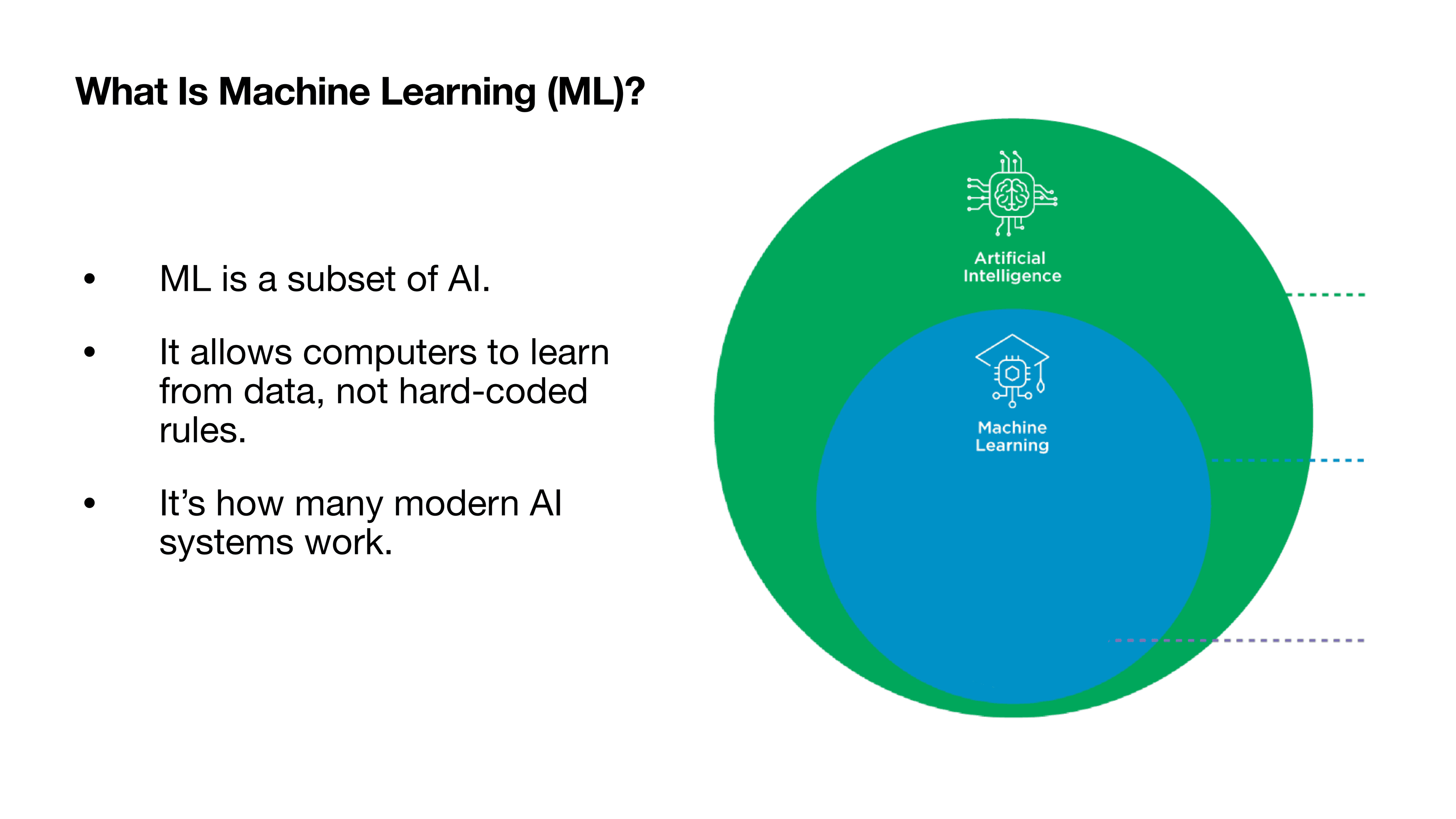
Key point: Machine Learning is how most modern AI is actually made possible. When people talk about AI doing impressive things, the underlying mechanism is almost always ML.
Think of it like baking a cake. AI is the finished cake. ML is the recipe and process that makes it. Data is the ingredients. Without good ingredients and a solid method, you do not get a good result.
How ML Relates to AI: The Full Picture
The relationship between these terms is hierarchical:
Artificial Intelligence is the broad goal of simulating intelligent behaviour in machines.
Machine Learning is one of the main tools used to achieve AI. Instead of hard-coding rules, we let systems learn from data.
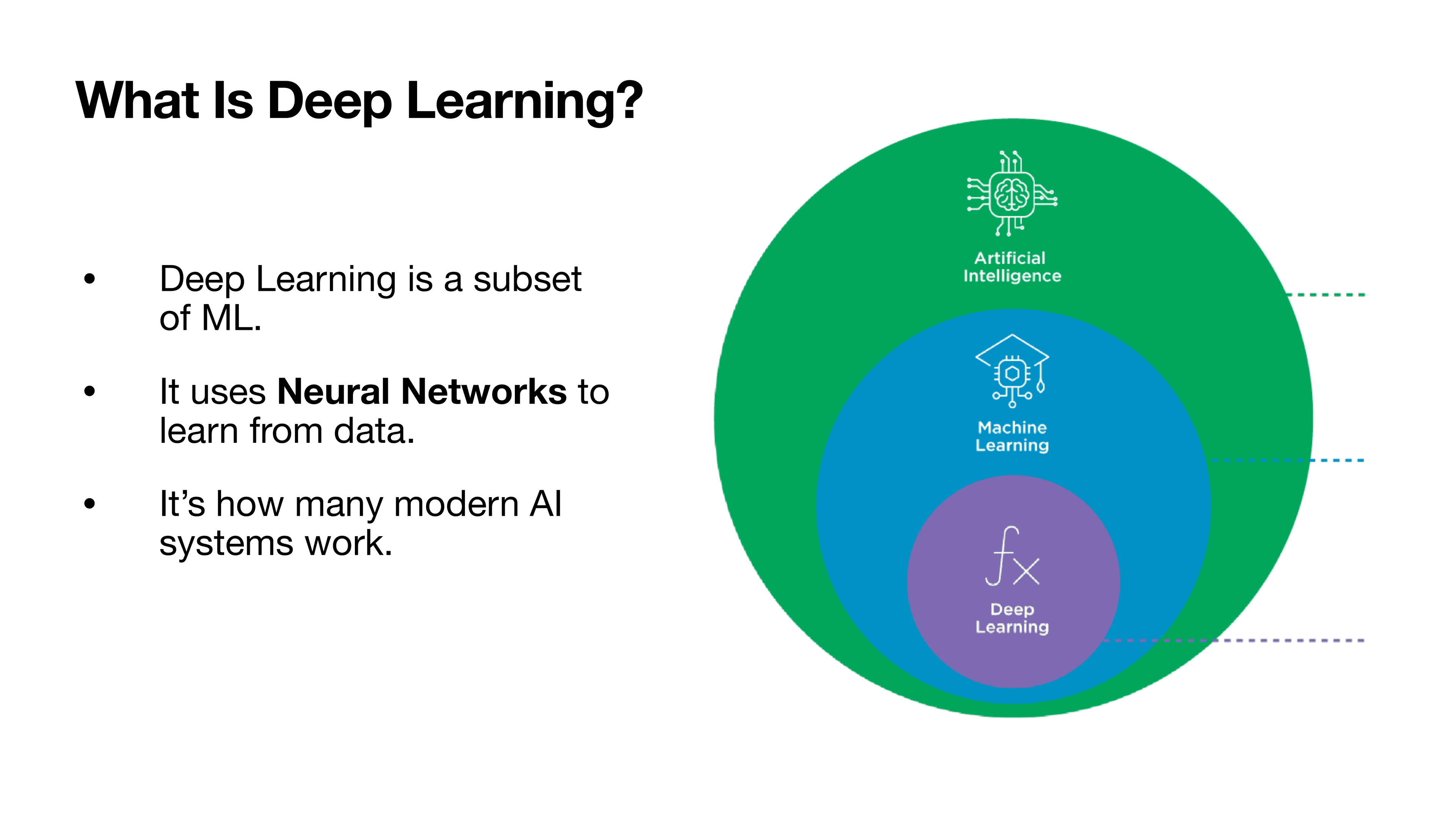
Deep Learning is a subfield of ML that uses large neural networks to model complex patterns. It is the technology behind image recognition, language models, and much more.
Neural Networks: The Brain-Inspired Engine
A neural network is a set of connected nodes, like digital neurons, that work together to find patterns in data. They are inspired by the human brain, but far simpler in practice.
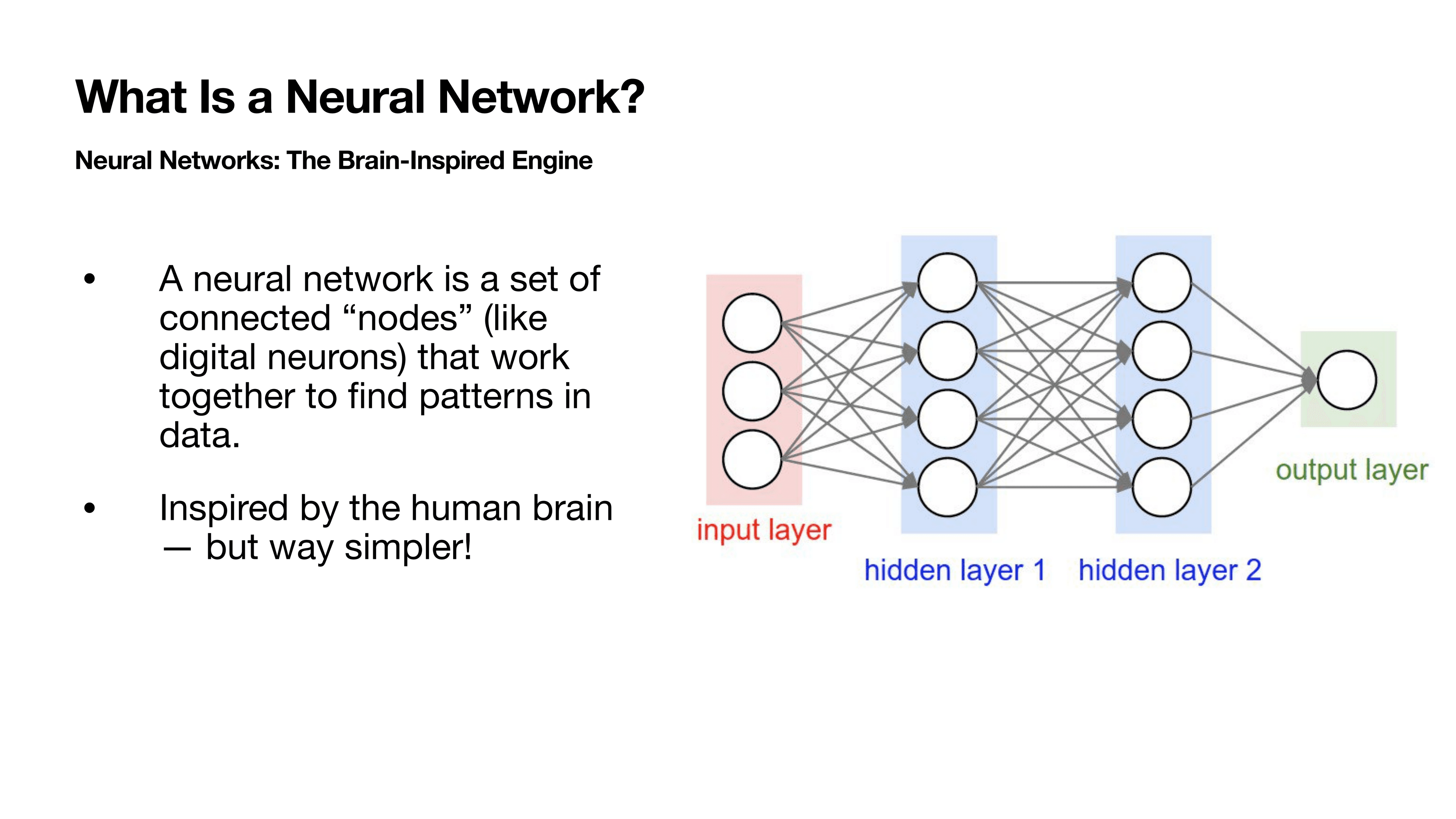
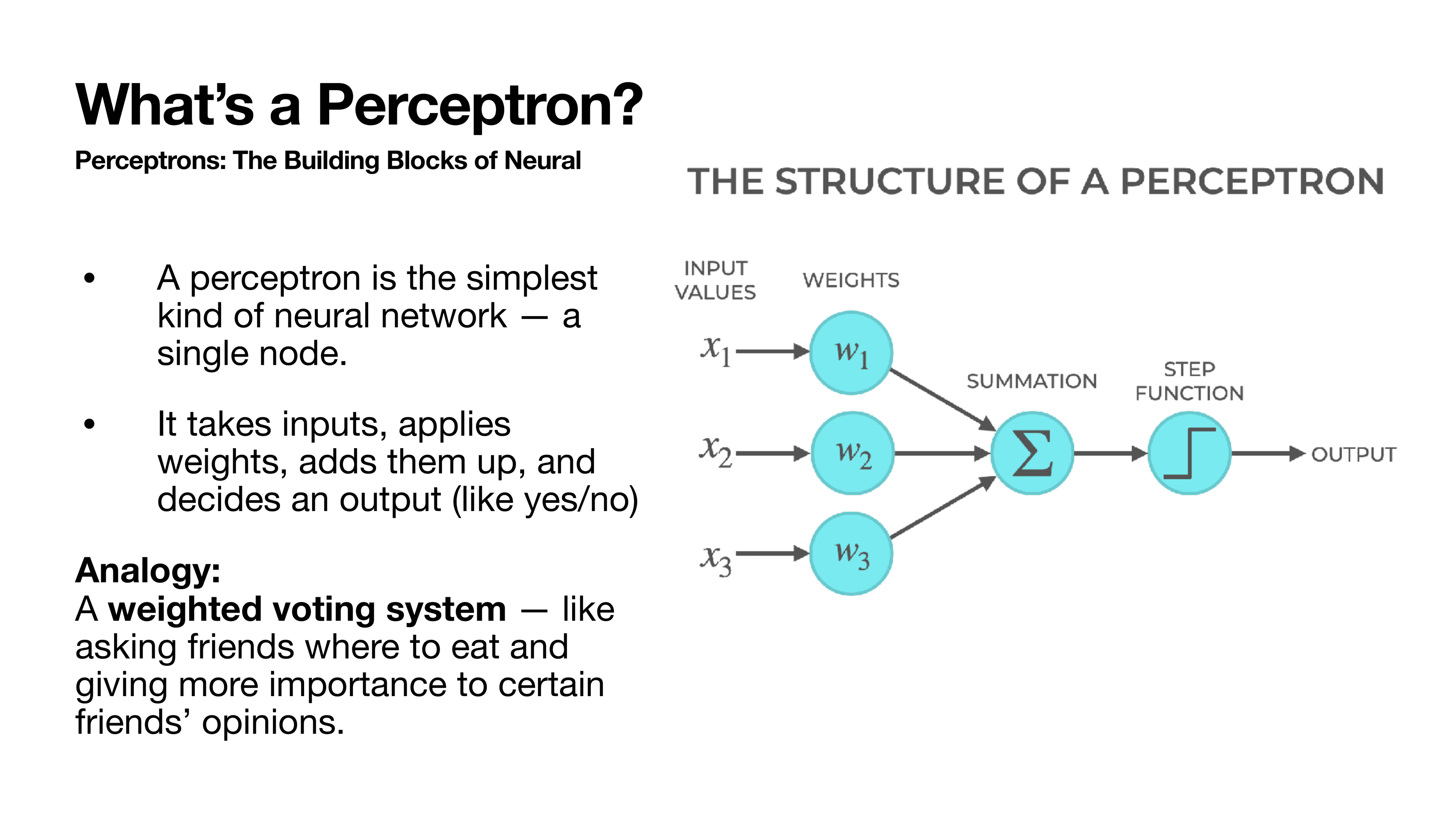
The simplest form of a neural network is the perceptron, a single node that takes inputs, applies weights to them, adds them up, and decides an output. Think of it as a weighted voting system: you ask friends where to eat and give more importance to certain opinions.
How Neural Networks Learn
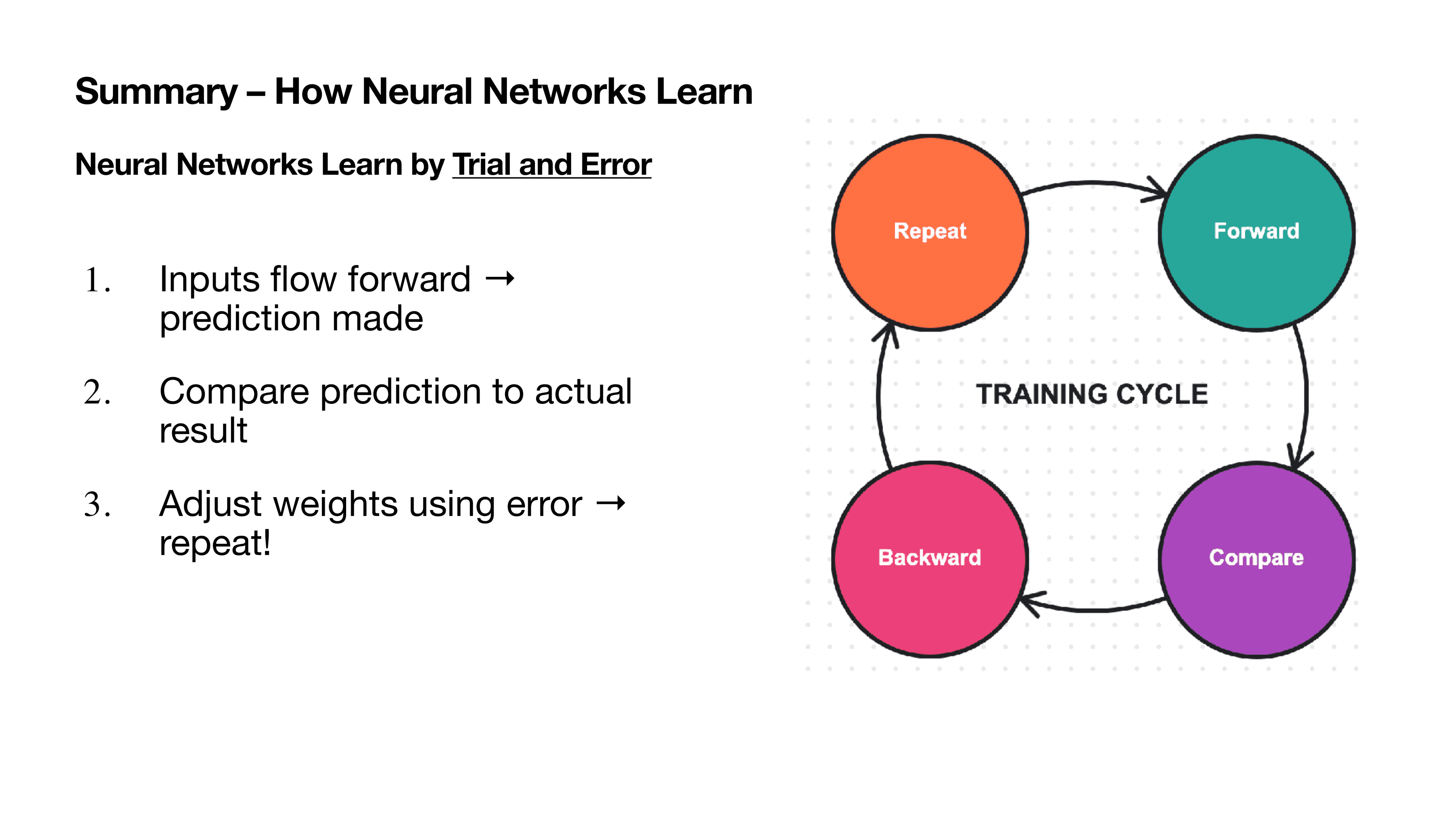
Neural networks learn through a cycle of trial and error, repeated thousands or millions of times.
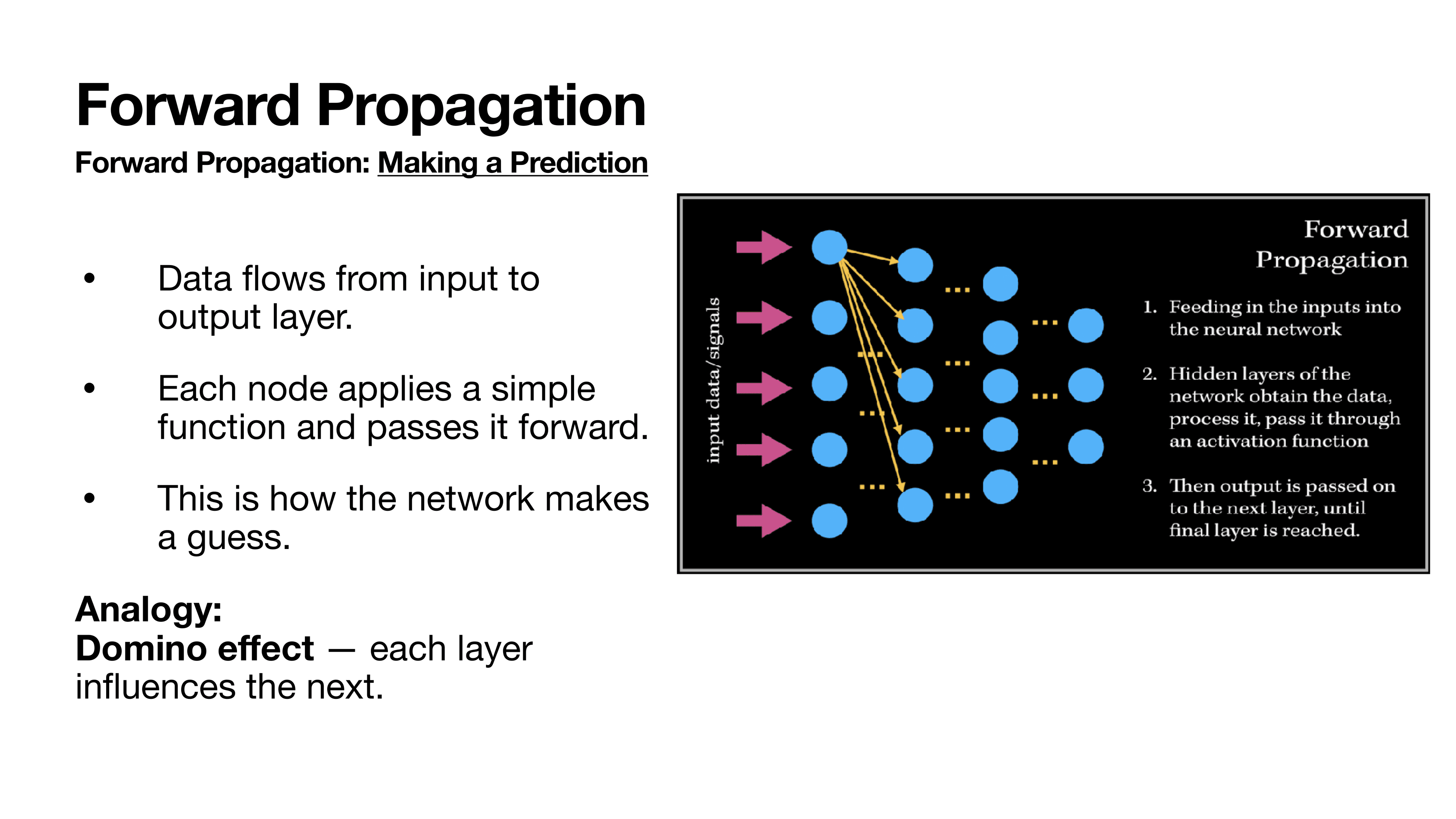
Forward Propagation is the first step. Data flows from the input layer through hidden layers to the output layer. Each node applies a simple function and passes the result forward. This is how the network makes a prediction. Think of it as a domino effect: each layer influences the next.
Backward Propagation is where learning happens. After making a prediction, the network checks how wrong it was. It then adjusts the weights slightly to improve next time. This process repeats over and over with many examples. The analogy is bowling with bumpers: each mistake helps guide the ball closer to the pins.
The full training cycle is: forward pass, compare prediction to actual result, adjust weights using the error, and repeat.
Three Types of Machine Learning
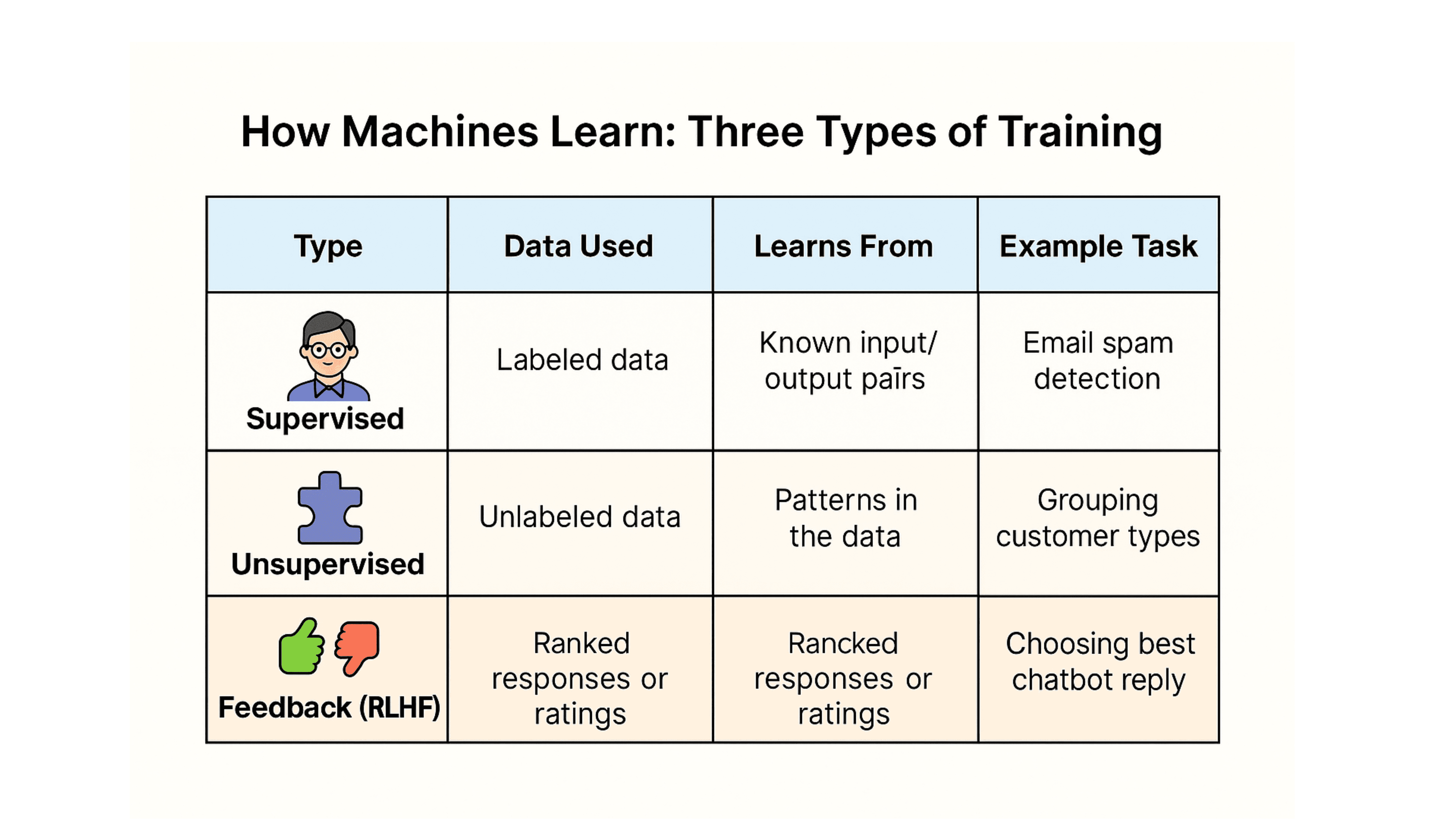
Not all ML works the same way. There are three main approaches:
Supervised Learning uses labelled data, where the correct answer is already known. The model learns from known input-output pairs. Example: email spam detection, where the model learns from emails already flagged as spam or not spam.
Unsupervised Learning uses unlabelled data and finds hidden patterns on its own. Example: grouping customers into segments based on purchasing behaviour without being told what the groups should be.
Reinforcement Learning from Human Feedback (RLHF) improves by learning from human ratings and corrections. Example: fine-tuning a chatbot to give better responses based on user feedback.
What Is a Large Language Model?
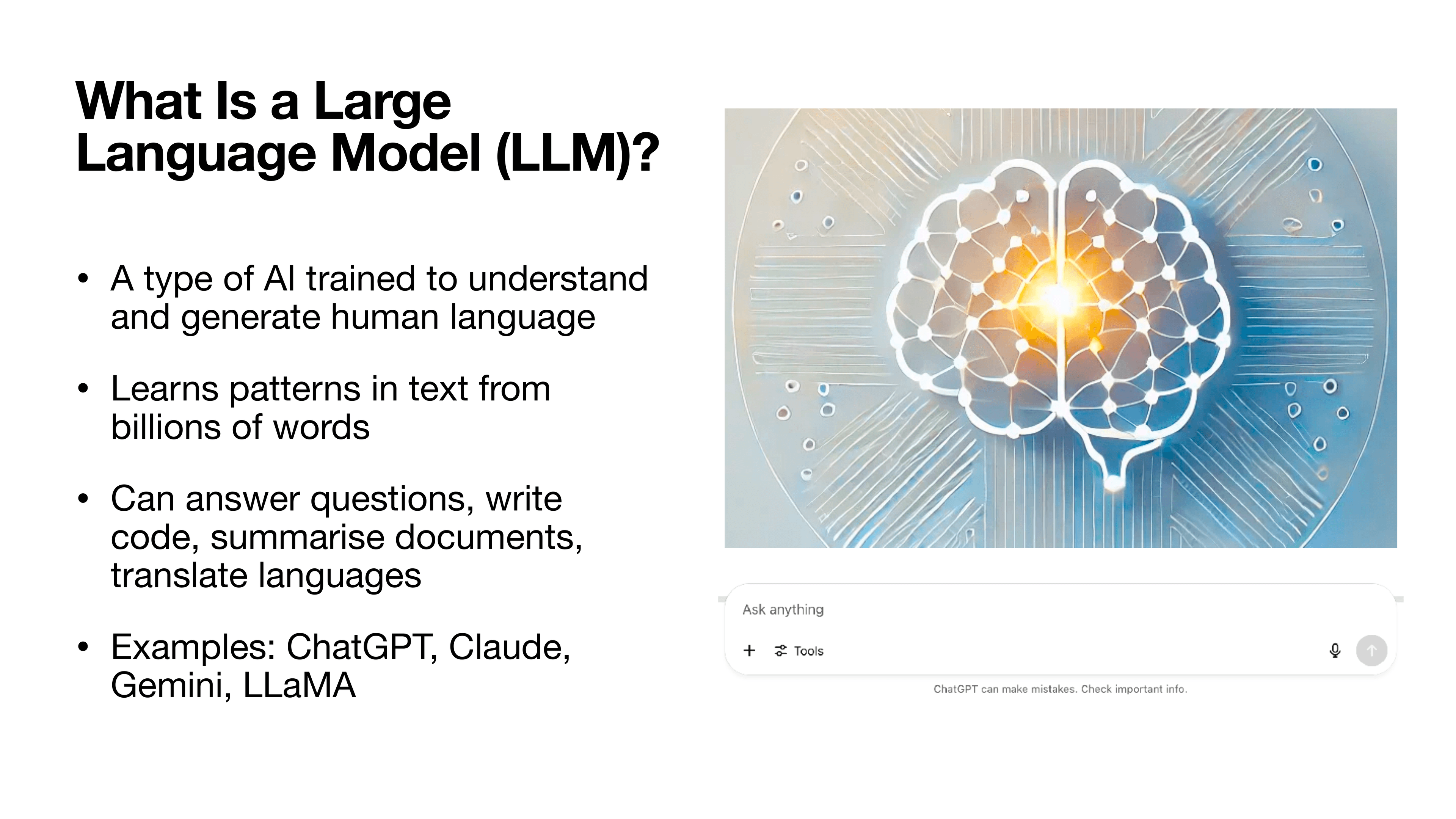
Large Language Models like ChatGPT, Claude, Gemini, and LLaMA are a type of AI trained to understand and generate human language. They learn patterns in text from billions of words and can answer questions, write code, summarise documents, and translate languages.
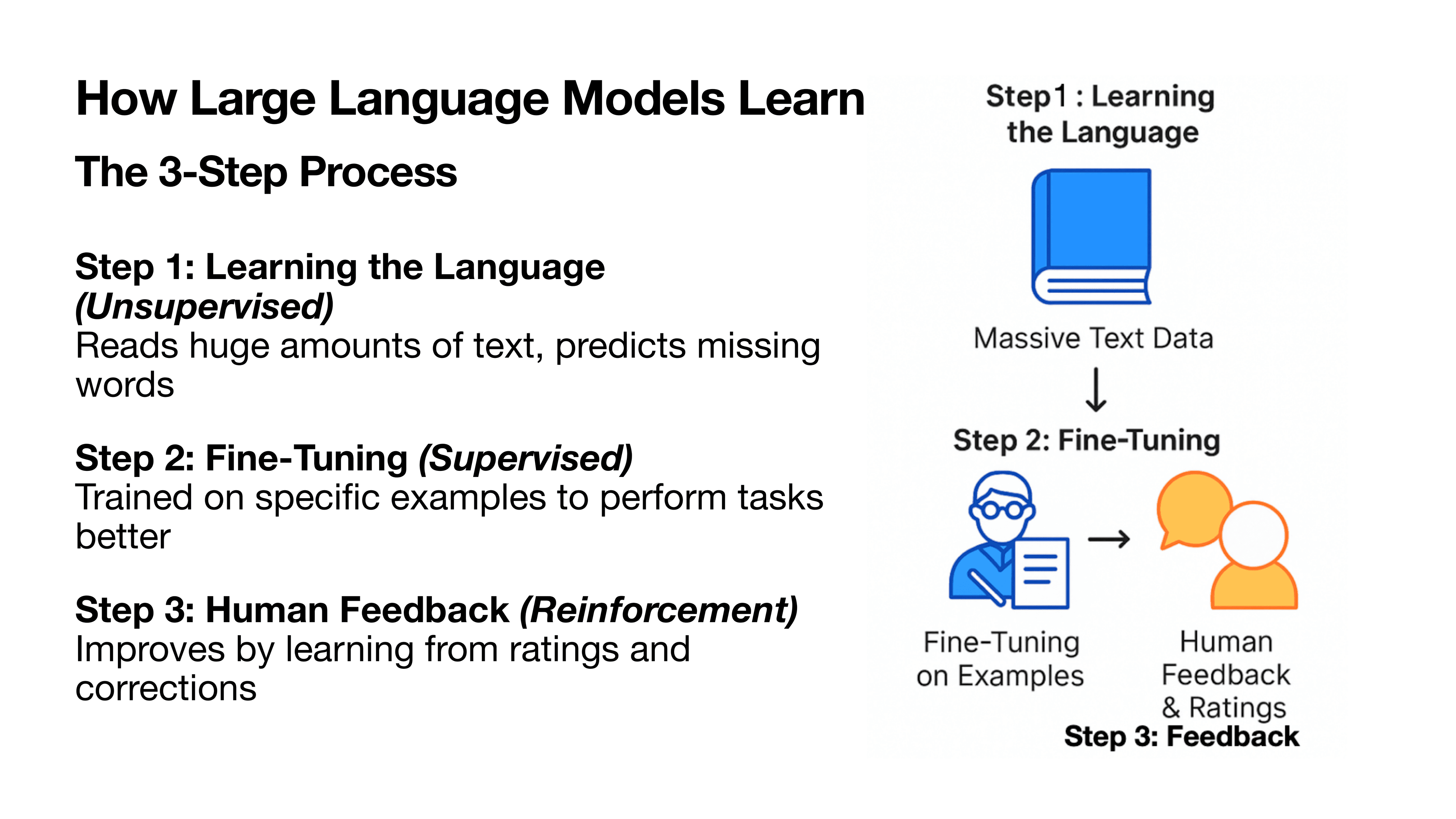
LLMs learn through a three-step process:
Step 1: Learning the Language (Unsupervised). The model reads huge amounts of text and learns to predict missing words. This gives it a broad understanding of language structure and knowledge.
Step 2: Fine-Tuning (Supervised). The model is trained on specific examples to perform tasks better, like answering questions accurately or following instructions.
Step 3: Human Feedback (Reinforcement). The model improves by learning from human ratings and corrections, becoming more helpful and aligned with what users actually want.
How AI Image Generators Work
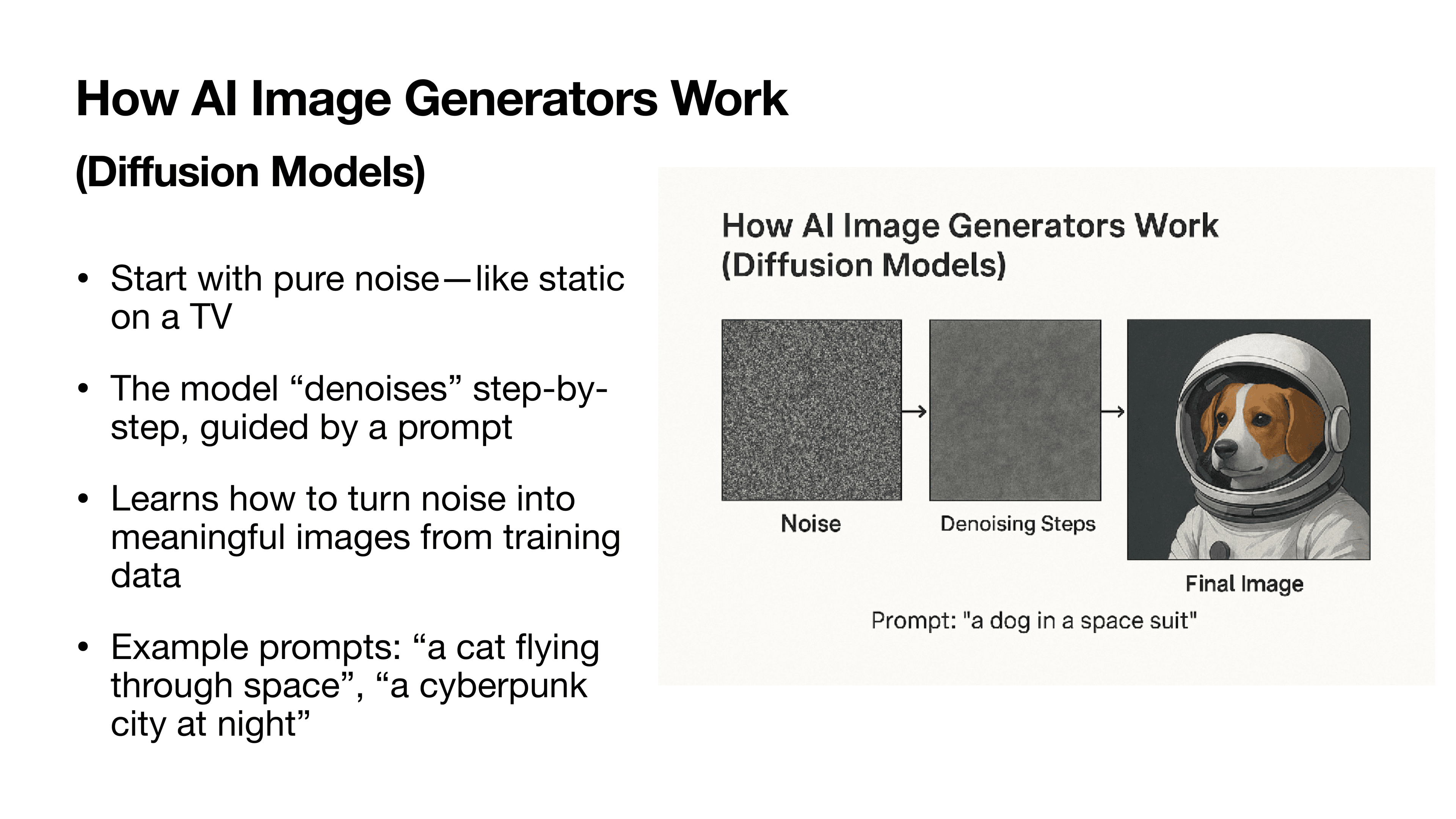
AI image generation uses diffusion models. The process starts with pure noise, like static on a television. The model then denoises the image step by step, guided by a text prompt, until a meaningful image emerges. It has learned how to turn noise into coherent images from its training data.
Industrial Applications: Where AI Delivers Real Value
Understanding the technology is important, but the real question for most businesses is: what can it actually do? Here are proven applications across three major sectors.
AI in Finance: Fraud Detection
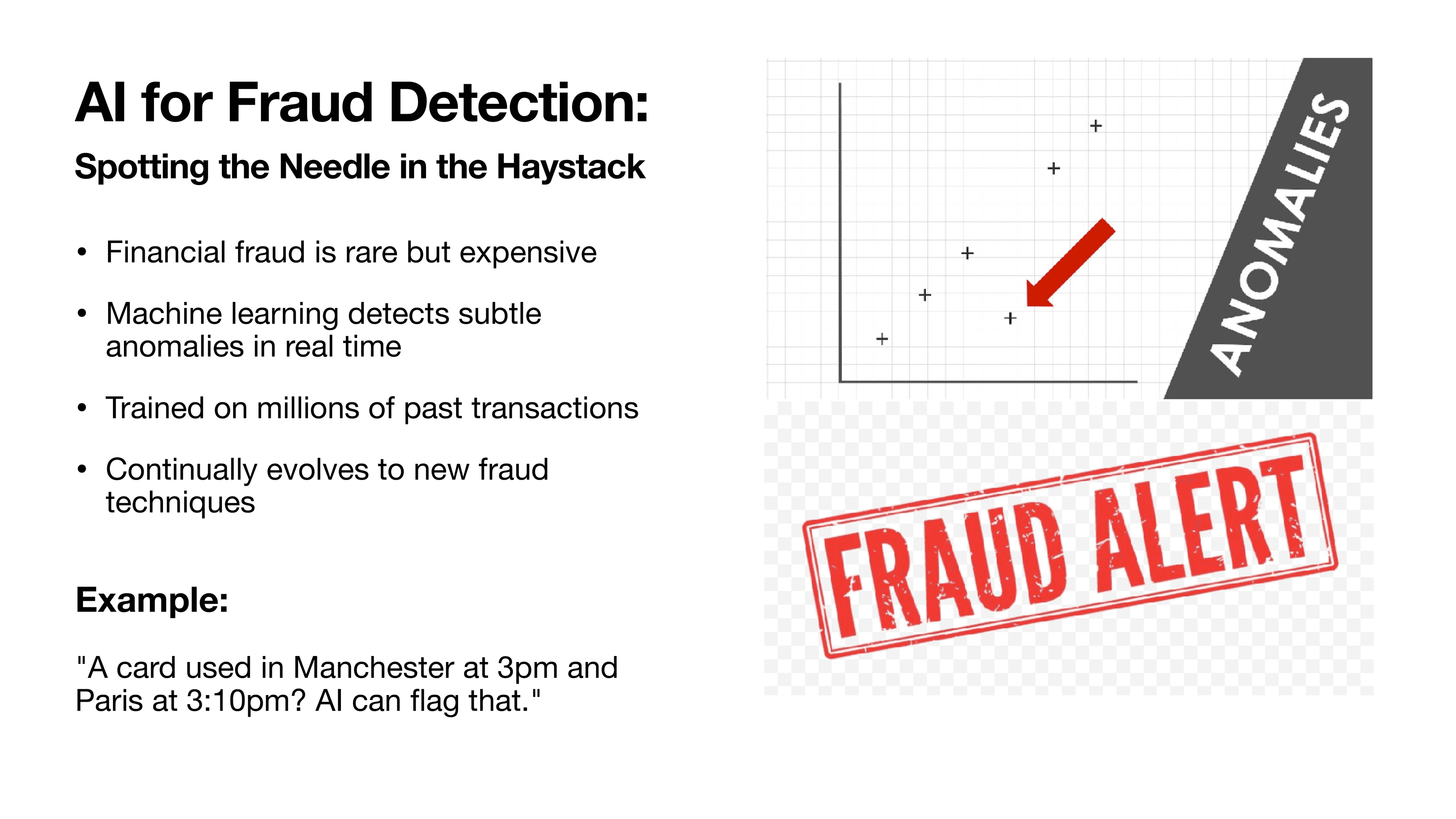
Financial fraud is rare but expensive. Machine learning detects subtle anomalies in real time that rule-based systems miss. Models are trained on millions of past transactions and continually evolve to counter new fraud techniques.
Consider this example: a card used in Manchester at 3pm and Paris at 3:10pm. A human reviewer might miss it in a batch of thousands of transactions. AI flags it instantly.
AI in Finance: Algorithmic Trading
ML models analyse price data, sentiment, and market indicators to make trading decisions in milliseconds. Used by hedge funds, investment banks, and increasingly by retail traders, these systems can detect patterns and act on them far faster than any human.
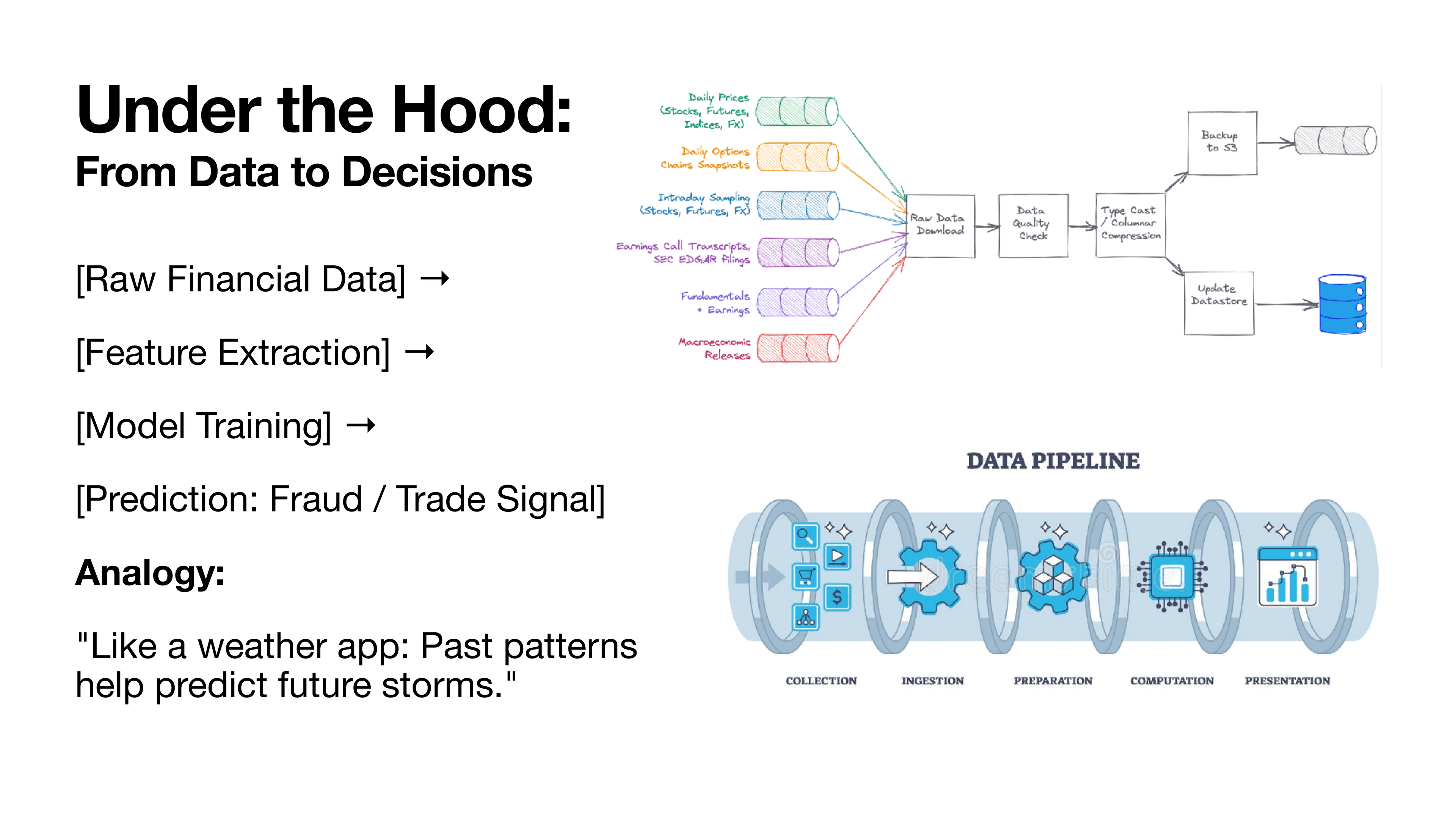
The underlying process follows a data pipeline: raw financial data flows through feature extraction, model training, and finally produces predictions such as fraud signals or trade signals. As the analogy goes, it is like a weather app: past patterns help predict future storms.
AI in Cybersecurity: Smarter Defences
Traditional security tools struggle to keep up with evolving threats. AI learns normal patterns of network behaviour and flags anomalies. It is used in intrusion detection, malware analysis, and phishing prevention.
For example, AI can detect a subtle change in login behaviour suggesting a compromised account, long before a human analyst would notice.
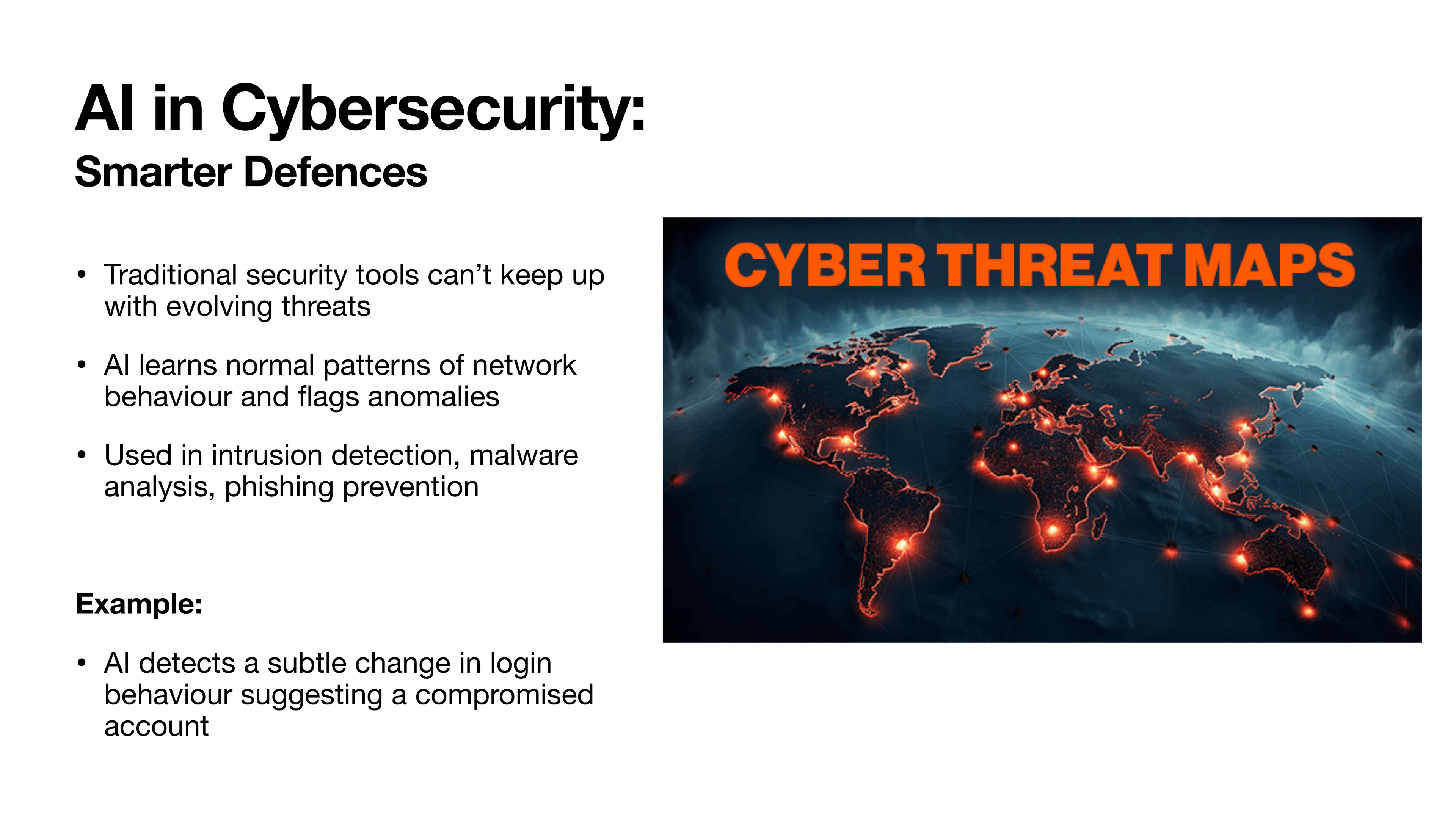
AI processes vast volumes of logs, emails, and network traffic in real time, enabling proactive defence rather than reactive response. Modern Security Information and Event Management systems use AI to automatically isolate a device from the network when ransomware behaviour is detected.
The Human + AI Team
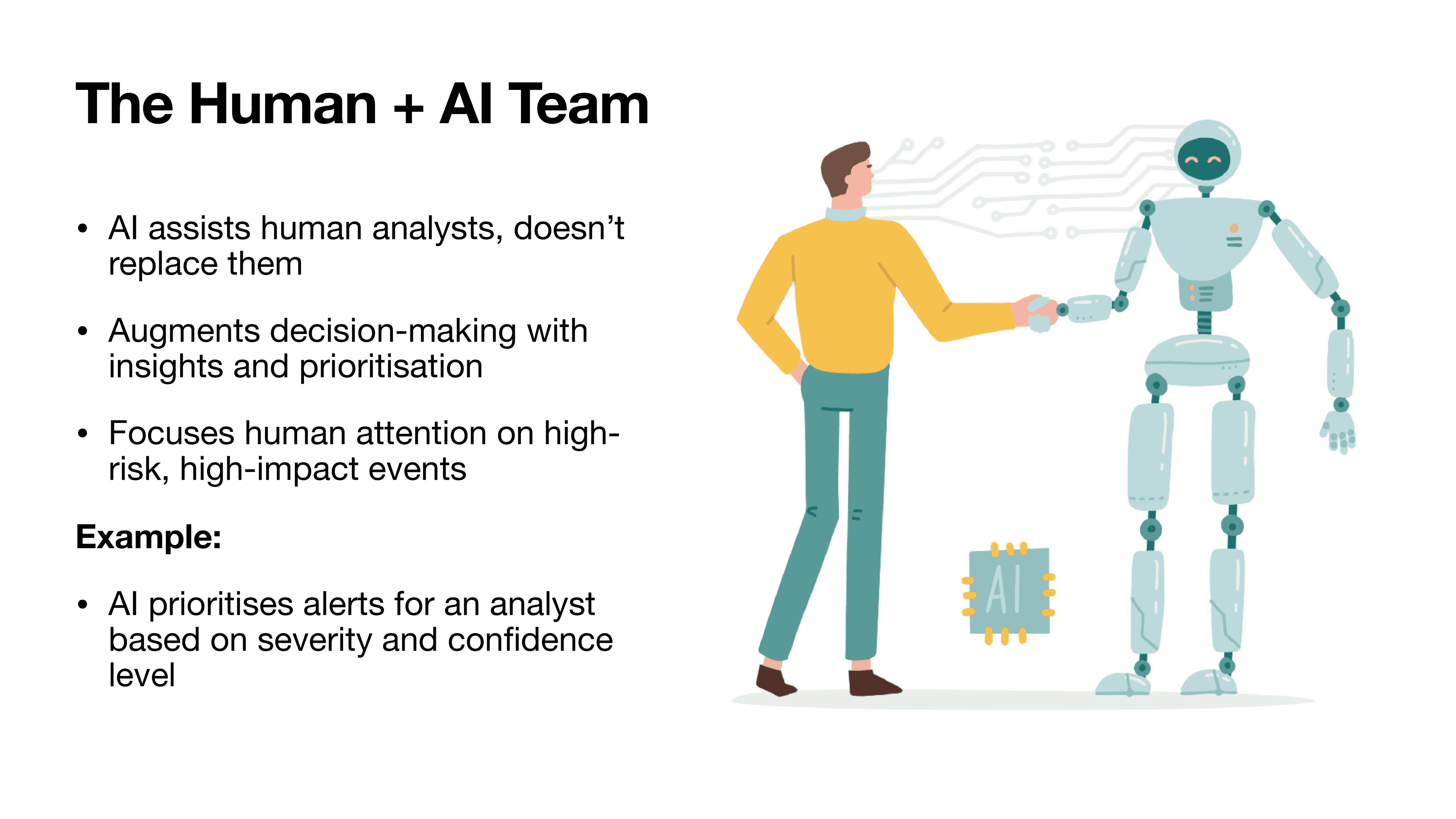
A critical point: AI assists human analysts, it does not replace them. The best implementations augment decision-making with insights and prioritisation, focusing human attention on high-risk, high-impact events.
For example, AI prioritises security alerts for an analyst based on severity and confidence level. The analyst makes the final call, but they are working from a pre-sorted, pre-analysed queue rather than raw noise.
AI in Manufacturing: Predictive Maintenance
AI powers predictive maintenance, quality control, and process optimisation. It reduces downtime and defects while improving safety and operational efficiency.
Machine learning monitors vibration, temperature, sound, and energy use from sensors across equipment. It forecasts wear-and-tear patterns and enables just-in-time repairs instead of routine servicing. A sensor can warn that a machine part will fail 10 days before it happens, preventing a costly shutdown.
Case Study: Bosch implemented AI to monitor equipment across multiple plants, combining sensor data with historical failure patterns. They achieved a 25% reduction in unplanned downtime, increased production line availability, and reduced maintenance costs.
AI in Manufacturing: Quality Control
AI-powered vision systems inspect products in real time with greater accuracy and consistency than human inspectors. They can adapt to detect new types of defects as they emerge.
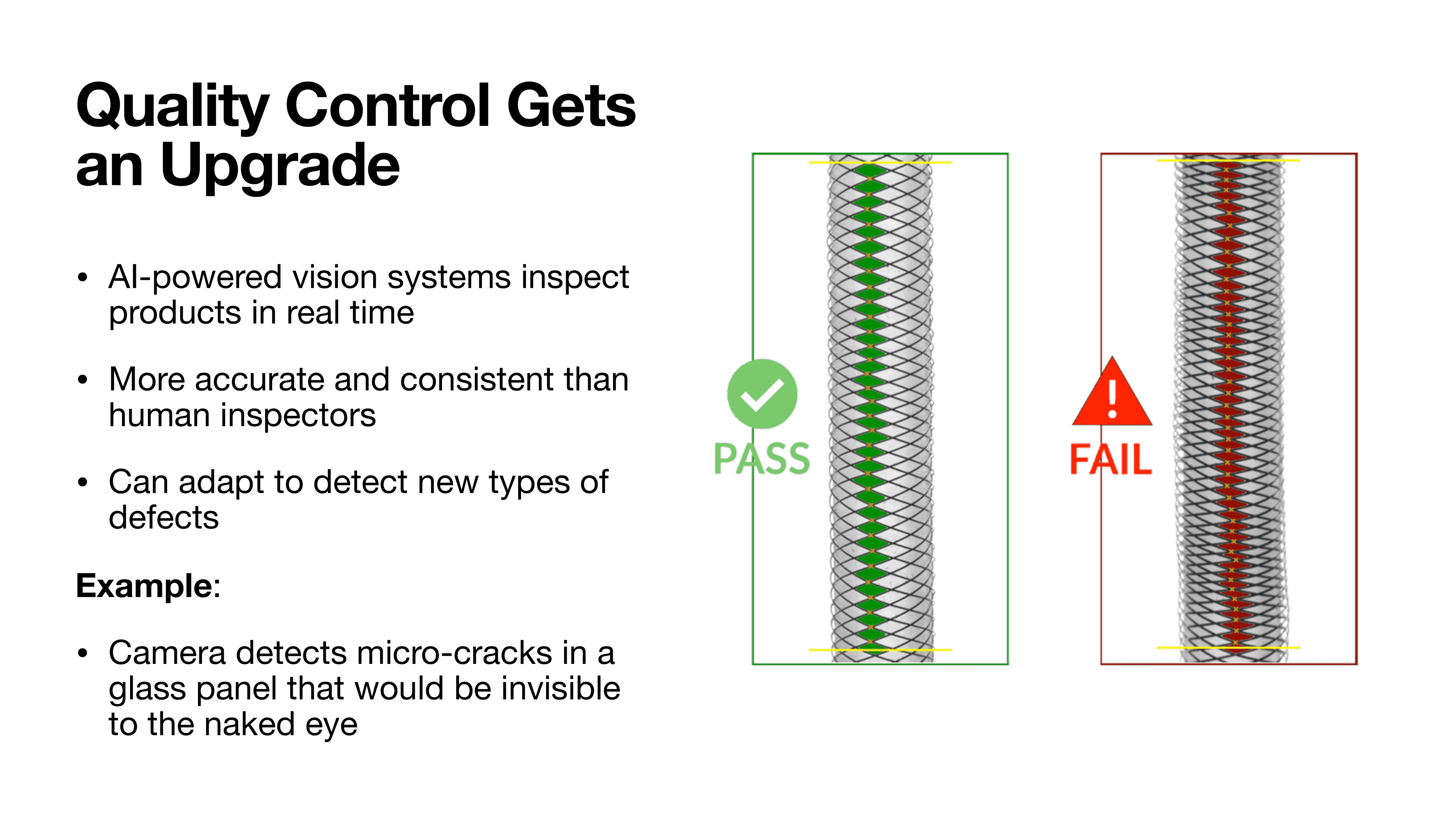
For example, a camera system can detect micro-cracks in a glass panel that would be invisible to the naked eye, catching defects before products reach customers.
Getting Started: You Do Not Need to Be a Coder
One of the biggest misconceptions about AI is that you need a computer science degree to use it. That is no longer true.
No-code tools like Google Teachable Machine let you classify images, sounds, or poses using your webcam. Models train in minutes using your own data. You can build a working prototype, for example classifying two types of screws on an assembly line, without writing a single line of code.
AI platforms like ChatGPT, Claude, and Hugging Face Spaces let you experiment with text, image, and sound models immediately. These are excellent for understanding what AI can do before committing to a full project.
For the more technical, tools like Google Colab let you run Python code in the cloud using libraries like scikit-learn, pandas, matplotlib, and tensorflow. This is where you can build custom models tailored to your specific data and business needs.
The Path from Data to You
The journey from raw data to real business value follows a clear chain: data feeds machine learning, which powers artificial intelligence, which enables applications, which serve you and your business.
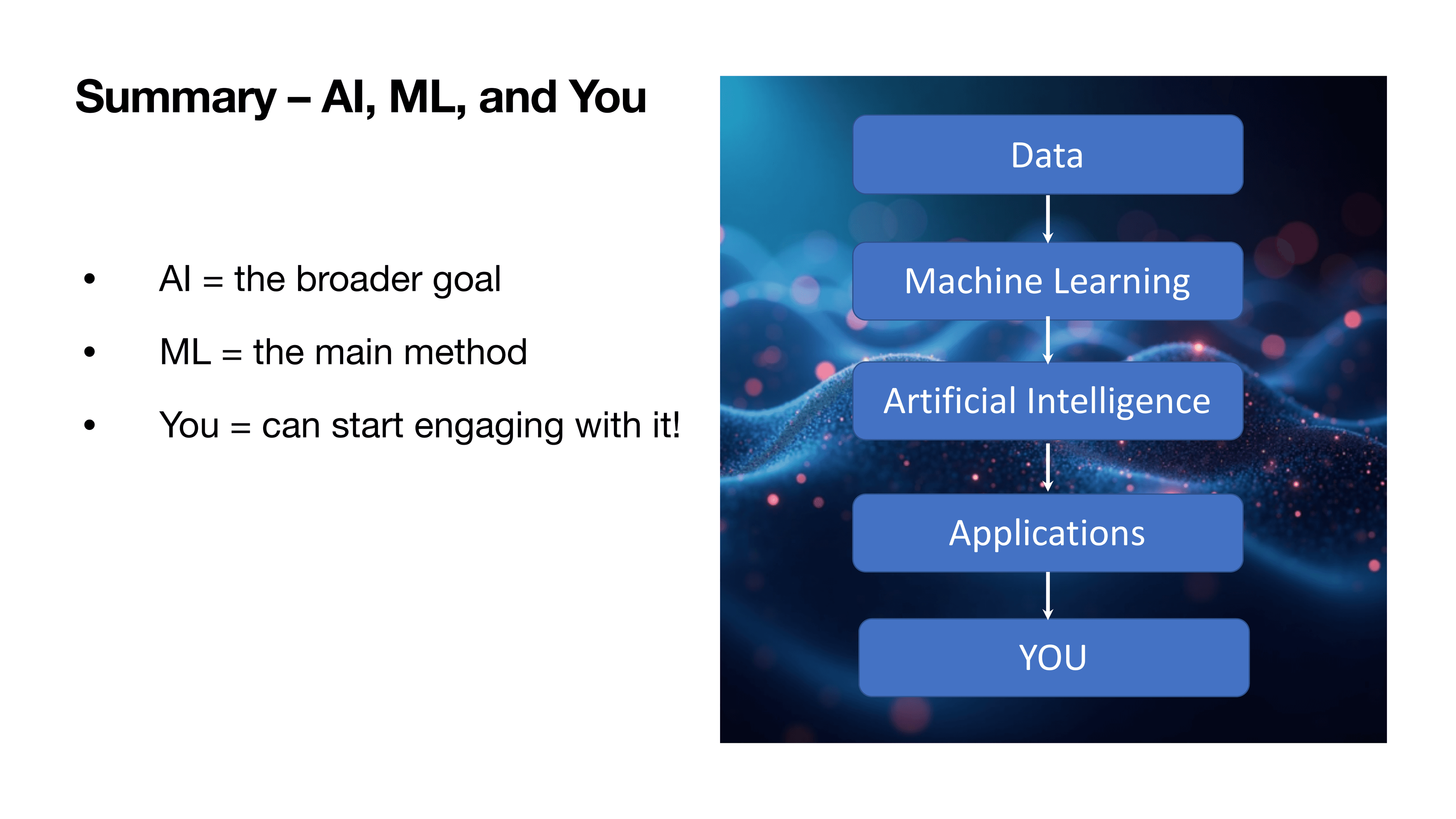
Every business sits somewhere on this chain. The question is not whether AI is relevant to your business. It is where you start.
Where to Go from Here
If you are on the Isle of Man and want to explore what AI and machine learning could do for your business, there is real support available. The Activate AI programme provides free training and pilot project support, while the Department for Enterprise's Business Consultancy Scheme reimburses 50% of external consultancy costs - up to £7,500 per project. Insight Innovation works as an official Activate AI Partner, helping businesses scope qualifying projects, apply to the scheme, and deliver the implementation from start to finish.
The technology is ready. The funding is available. The only question is whether you are ready to develop your edge.
Want to discuss how AI could work for your business?
Book a free 30-minute discovery call. No pitch. No pressure.
Book a Discovery Call